
Free Celtic Cross tarot reading: ten positions and a complete example
In this article
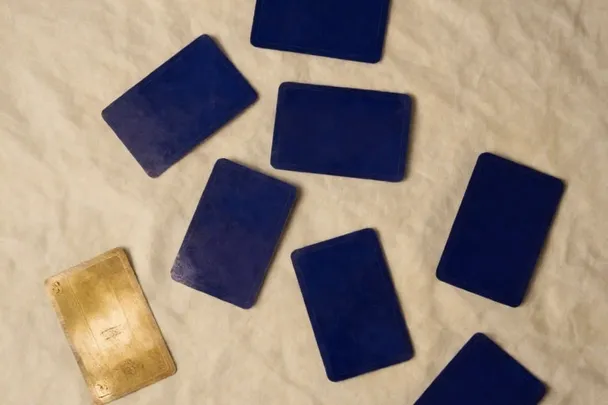
You can do a free Celtic Cross tarot reading with your own deck and the ten positions below. It gives each card a different role, so you can explore one question without expecting ten separate predictions. Choose a situation you can describe, leave room for uncertainty and keep the same positions throughout.
If you want digital cards immediately, Astroideal's free spread tool is in Spanish. Its Celta option is a simplified six-card format, not the ten-card layout explained here. The manual exercise below does not require an account or a purchase.
Free one-card and three-card practice
For a shorter self-reading, choose one card as a theme to examine, then write one visible detail, one possible interpretation and one question. There is no need to assign that card a yes or no answer. If you want a digital format, the free yes-or-no tool is in Spanish and offers one, three or five cards with prepared results.
For three cards, use situation / challenge / possible approach. Keep those positions while interpreting and finish with something you can check. The linked digital spread tool includes several formats; its question field is optional and does not send your question to a reader or AI. These free tools are different from a free personal consultation.
A clear ten-card layout
Different guides use different orders for the middle positions. Use one complete convention; do not mix labels halfway through a reading. This exercise uses the following arrangement:
- Put card 1 in the centre and card 2 across it as the challenge.
- Place 3 below, 4 to the left, 5 above and 6 to the right.
- Put 7, 8, 9 and 10 in a vertical column to the right, from bottom to top.
| Position | Role in this exercise | A question to explore |
|---|---|---|
| 1 | Present situation | What aspect of the issue am I looking at? |
| 2 | Challenge or tension | What makes it difficult? |
| 3 | Foundation | Which known circumstance underlies the question? |
| 4 | Recent past | What experience am I bringing into this? |
| 5 | Aim | What would I like to achieve? |
| 6 | Next step to consider | What possible approach deserves attention? |
| 7 | My role | What can I choose or influence? |
| 8 | External context | Which conditions should I check outside the reading? |
| 9 | Hopes and fears | What expectation might be colouring my interpretation? |
| 10 | Synthesis | What question or possible direction connects the whole spread? |
“Foundation” does not uncover your unconscious, and “external context” does not reveal another person's secret intentions. Position 10 is a synthesis for this reflective exercise, not a forecast.
How to do the reading
Write one question, such as “What should I review before joining this project?”. Choose whether you will use reversals, shuffle in a way that is comfortable for you, and deal ten cards. Crossing card 2 is a layout choice; it does not automatically make that card reversed.
First describe the images. Then read each in relation to its assigned role. Look for a contrast you can explain: an ambitious aim and an overloaded schedule, for example. Check whether that contrast exists in the situation rather than assuming the cards discovered it.
You can use fewer cards if ten feel unwieldy. A three-card situation / challenge / possible approach spread is a complete exercise in its own right.
Complete example: considering a shared project
The following cards are deliberately chosen for an invented learning example. They are not a client's reading or evidence of an outcome.
| Position and card | Interpretation as a question |
|---|---|
| 1. Magician | Which skills and tools do I already bring? |
| 2. Ten of Wands | Would the workload exceed the time I want to give? |
| 3. Emperor | What responsibilities are already defined? |
| 4. Five of Cups | Am I judging this offer through a previous disappointment? |
| 5. Star | Which aspiration makes the project attractive? |
| 6. Temperance | Could a small trial clarify whether the arrangement works? |
| 7. Strength | Which boundary am I prepared to communicate? |
| 8. Justice | What terms or information should I ask the team to confirm? |
| 9. Moon | Which fears are assumptions rather than known facts? |
| 10. World | What would a complete, useful outcome look like to me? |
A possible synthesis is: “I will ask for the responsibilities in writing, estimate the workload and suggest a trial with a review date.” That action can be evaluated in real life; its usefulness does not demonstrate predictive accuracy.
Read across positions 2 and 7: workload and boundaries. Then compare 5 and 10: an aspiration and what completion would actually mean. These connections add a question, not a claim that one card overrides all the others.
Love questions and other people's choices
For a relationship, keep the focus on what you observe, need and can discuss. In position 8, write the external information you need rather than inventing a partner's thoughts. If you are considering reconciliation, the World guide explains why completion does not necessarily mean reunion.
A hope in position 9 is a hope, even when the card looks encouraging. Do not silently relabel it as the outcome because it is the answer you wanted.
Reversals, contradictions and time
Reversals are optional. If you use them, choose a consistent lens such as difficulty, excess or limited expression of a theme. A spread with many reversals does not diagnose psychological resistance. Many major arcana do not show that your life is controlled by fate.
If two cards suggest different questions, keep both until you can compare them with the situation. You do not have to force one reassuring conclusion. There is no required reading duration: stop when you have a clear question, take a break, or return to your notes later.
Free digital and human readings are different
An automatic reading selects cards and displays prepared interpretations. A human can discuss context and explain a reading in conversation. A free self-reading like this exercise is a third format. Do not assume a free tool includes a free personal consultation or that a longer layout is more accurate.
You can review the symbols in the English tarot card meanings guide. Write down the question, positions, cards, interpretation and anything that did not fit. Those notes make it easier to study your method without rewriting the reading after the event.
Frequently asked questions
Can I do a free ten-card Celtic Cross here?
The article provides a complete manual self-reading exercise using your own deck. The linked Spanish digital tool has a different six-card Celta format; it is not a ten-card digital Celtic Cross.
Does the last card predict the outcome?
No. In this exercise it connects the spread into a question or possible direction for reflection. It cannot establish a future event.
Is card 2 reversed because it crosses the first card?
No. Crossing is part of the layout. Decide separately whether you use reversed meanings and how you will mark the orientation.
¿Prefieres una lectura personal?
Compara profesionales, disponibilidad y tarifas de teléfono, chat o vídeo. Con la primera recarga recibes 10 € adicionales, según las condiciones de tu cuenta; es distinto de la pregunta gratuita en vídeo.
Por teléfono puedes informarte sobre cómo consultar. El chat y la videollamada se abren desde tu cuenta: créala gratis y recibe 10 € adicionales con tu primera recarga, o entra si ya la tienes.